
Every fiction writer runs into it at some point—staring at a blank page, knowing the story you want, but not finding the right way to start. Sometimes it’s a stubborn scene, sometimes it’s keeping track of character arcs, and other times it’s just losing momentum halfway through a story.
That’s exactly where today’s AI story generators are stepping in. They’re no longer basic writing tools. They can actually help you shape ideas, build worlds, fix pacing issues, and even suggest how a character should grow across chapters. It feels more like having a writing partner who doesn’t get tired halfway through your draft.
- Helps you build characters that feel more real and consistent
- Makes world-building and story structure easier to manage
- Supports smoother pacing and better flow across chapters
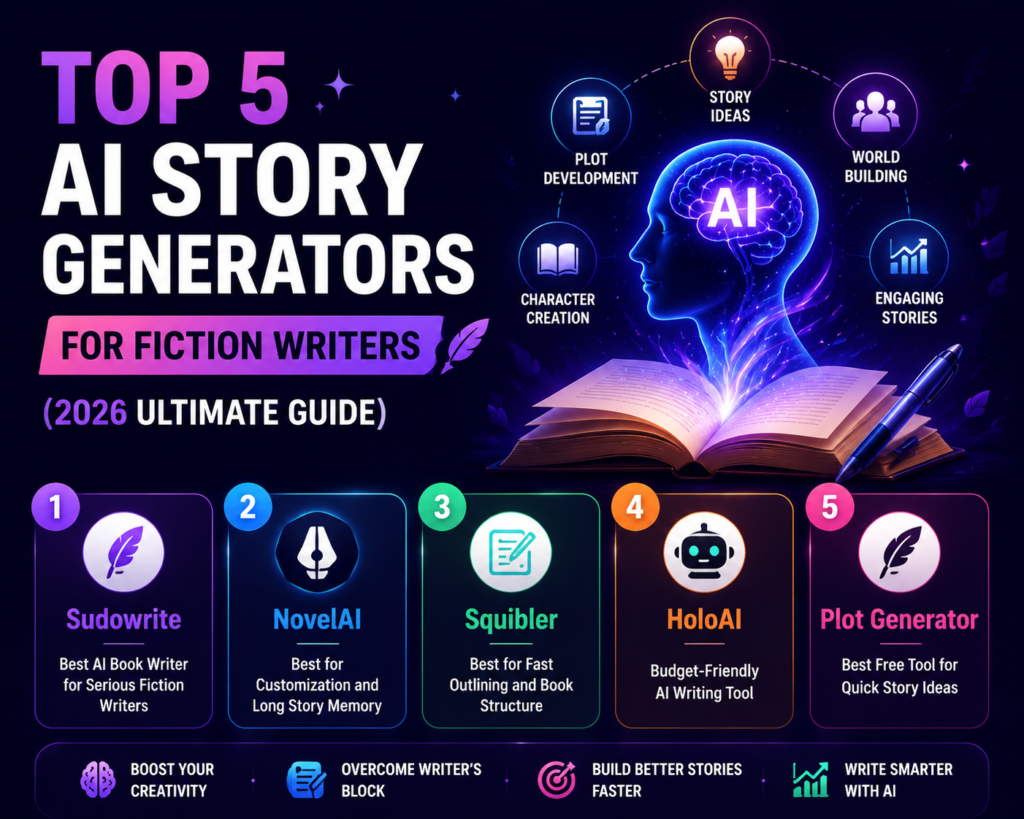
In this guide, we’ll look at the top 5 AI story generators based on how well they handle character memory, writing style, story flow, and overall ease when you’re working on long fiction.
From Blank Page to Finished Story: How AI Supports the Writing Process
Modern AI story generators have changed how writers work — shifting the focus away from starting with nothing, and toward shaping and developing ideas that already exist. Instead of getting stuck at the beginning, writers can now use AI to turn scattered thoughts into structured narratives, making the entire process faster and less overwhelming.
These tools don’t replace creativity—they help manage it better by supporting different stages of writing, from early ideas to final edits.
1. Brainstorming & Worldbuilding
Writer’s block often strikes the moment the page is blank. The AI will generate character ideas, plot twists, and locations that will jump-start your story.
Character arcs: Develops background stories, desires, and characteristics from basic ideas.
Story structure: This prevents you from being sporadic across chapters and long-form storytelling
2. Scene-by-Scene Drafting
Instead of having to write everything from the ground up, writers turn short ideas into complete scenes.
- Pacing and flow: Develops simple outlines into dialogue, action, and description
- Style control: Gives you control over the tone: suspenseful, emotional, lighthearted,
3. Developmental Editing & Refinement
Once you have a draft, AI could help you with cohesion and style.
- Strengthens shaky areas through showing, not telling
- Looks at tone, pacing, and emotional bits of the scenes
4. Workflow-Based Writing Tools
Different tools support different writing needs.
- Brainstorming: The chat solutions are great for generating ideas on the go
- Writing fiction: Spaces meant for conversations and narrative arcs
- Tools that take you from outline to final export
While remaining fully in creative control of the writing process, a modern AI story generator eliminates repeats of effort and assists in structuring ideas to make writing much more manageable.
Choosing the Best AI Book Writer: Tools Compared for Different Writing Styles
The best AI book writer for you depends on your writing style and the project you use. Certain tools are designed for elaborate fiction and creative writing, while others center around writing a complete book from start to finish.
For instance, you can use some tools such as Sudowrite to develop prose and ideas or Novelcrafter, if you want more stylistic control over world-building and story structure. While Inkfluence AI and AIWriteBook are built for writers looking to take their book from outline into a full publishing workflow, one that goes to final EPUB export.
| Platform | Best For | Standout Feature | Pricing Model |
| Sudowrite | Serious fiction writers, storytelling, plotting | “Story Bible” for character and narrative consistency | Starts at ~$19/month |
| NovelAI | Serious fiction writers, storytelling, and plotting | Advanced world-building and long-term story memory | Subscription + usage-based AI fees |
| Squibler | Fast outlining and book structure | Quick chapter outlines and structured book building | Subscription-based plans |
| HoloAI | Budget-friendly AI writing tool | Affordable fiction writing for beginners | Low-cost monthly plans |
| Plot Generator | Quick story ideas | Instant plot and story idea generation | Free |
A Closer Look at the Best AI Story Generators for Fiction Writers
Not all AI copywriting tools are created equal. The best ones get your subconscious working on world-building and remembering characters; others are easier to fast draft or jot down ideas when you hit a wall.
So to help solve those issues, here is a breakdown of the 5 best AI story generators, considering writing quality, story consistency, customization, and all-around ease of use for fiction writers.
1. Sudowrite – Best AI Book Writer for Serious Fiction Writers
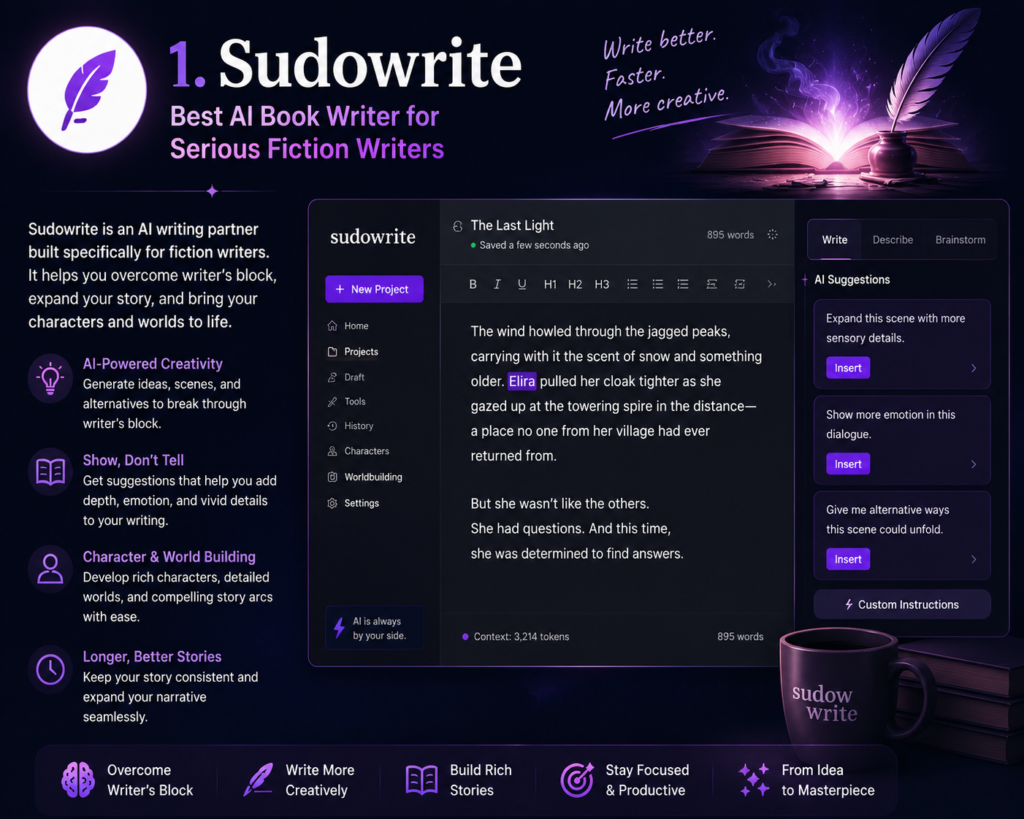
Sudowrite is designed for writers who need assistance composing stories while still keeping their own voice. Probably its most notable feature is the so-called Story Bible, where you can store details about characters, plot points, writing style notes, and chapter summaries in one place. That comes in handy when writing long novels with multiple plotlines.
Other features include handy tools like the visual organization tool “Canvas” and the “Describe” tool to enrich scenes with improved emotions, better atmosphere, and more sensory detail.
Feature Focus: Story Bible
The Story Bible helps organize:
- Characters and backstories
- World-building details
- Plot structure and chapter flow
- Writing style consistency
- Core Feature: Story Bible for story organization
- Pros: Great writing quality, strong character memory, supports different genres
- Cons: No permanent free version, takes time to fully learn
- Pricing: Starts around $19/month
2. NovelAI – Best for Customization and Long Story Memory
NovelAI is more popular among fantasy and sci-fi writers as it allows more control over the writing style and tone. The number one benefit is privacy; your stories remain completely private and are never used to train public AI models.
Its Lorebook feature recalls character names, locations, history, and plotlines over long chapters to help keep writers on track.
- Core Feature: Lorebook memory tracking system
- Best Used For: Writers who want detailed control over tone and vocabulary
- Extra Benefit: Works especially well for fantasy, historical, and sci-fi stories
3. Squibler – Best for Fast Outlining and Book Structure
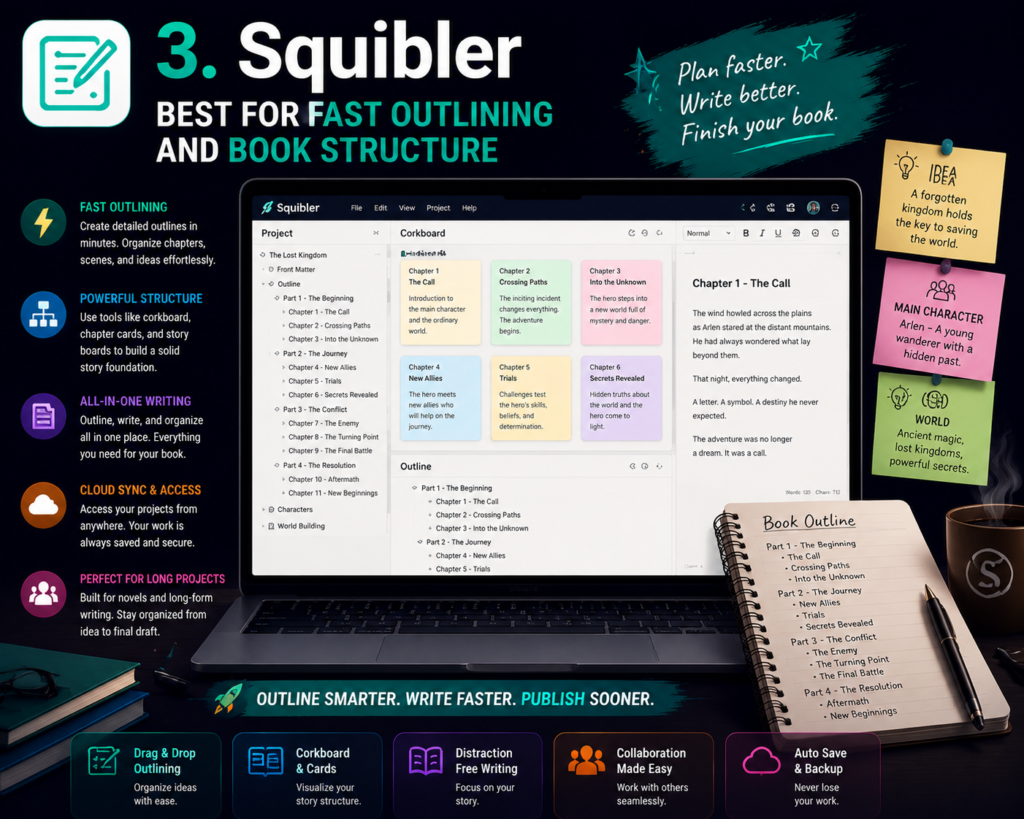
Squibler combines an AI writer and a sleek book writer, so if you want to outline and write a draft in one window, then this may be made for you! It helps you keep track of chapters, scenes, and ideas for stories in a way that feels as though your writing process isn’t cumbersome.
It will also assist writers who are planning to publish an ebook or Kindle books in the future.
Feature Checklist
- AI-generated scene outlines
- Character and plot tracking
- Easy chapter organization
- Kindle-friendly export options
- Simple distraction-free editor
4. HoloAI – Budget-Friendly AI Writing Tool
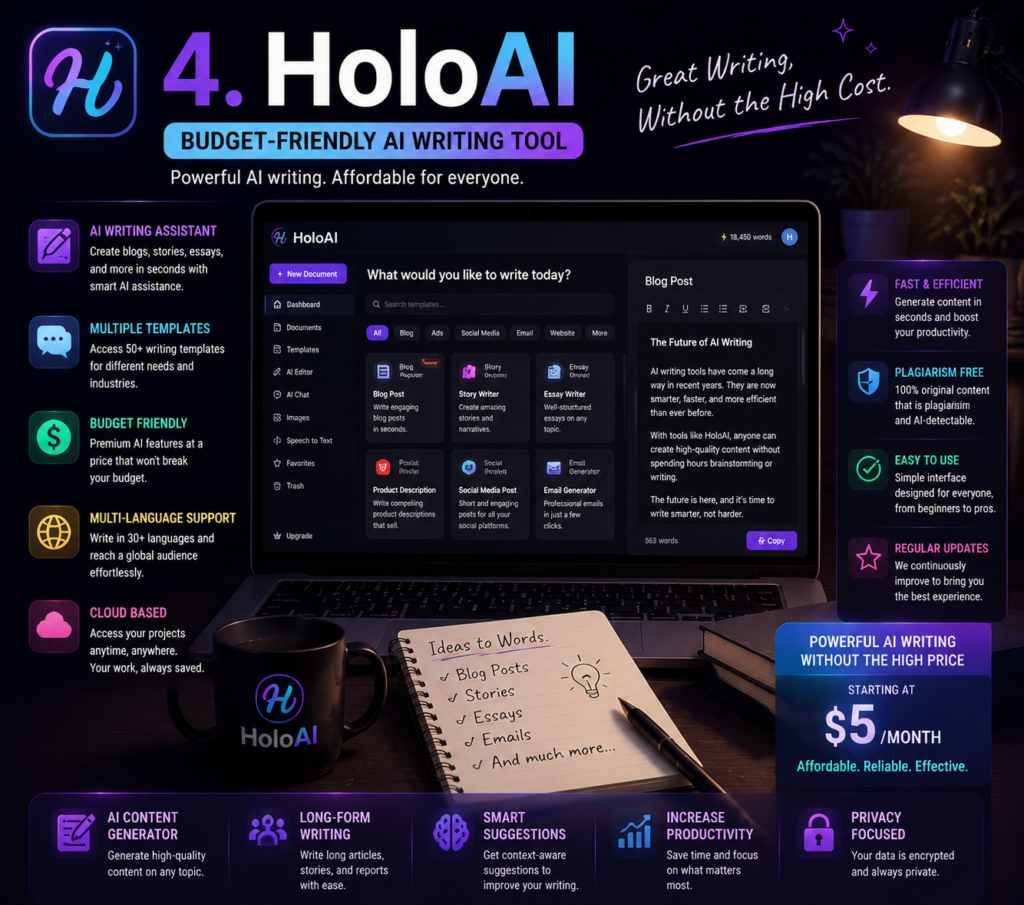
HoloAI — A simple, cost-effective alternative for writers looking for an AI support system without paying the premium monthly subscription. Good for brainstorming, short stories, and light fiction writing.
Although it lacks the in-depth capabilities that Sudowrite offers, the tool is still a great option if you are a writer looking for something light and simple.
| Pros | Cons |
| More affordable than premium tools | Less advanced writing quality |
| Easy for beginners | Weaker long-term memory |
| Good for short fiction | Limited world-building features |
| Simple interface | Fewer advanced creative tools |
5. Plot Generator – Best Free Tool for Quick Story Ideas
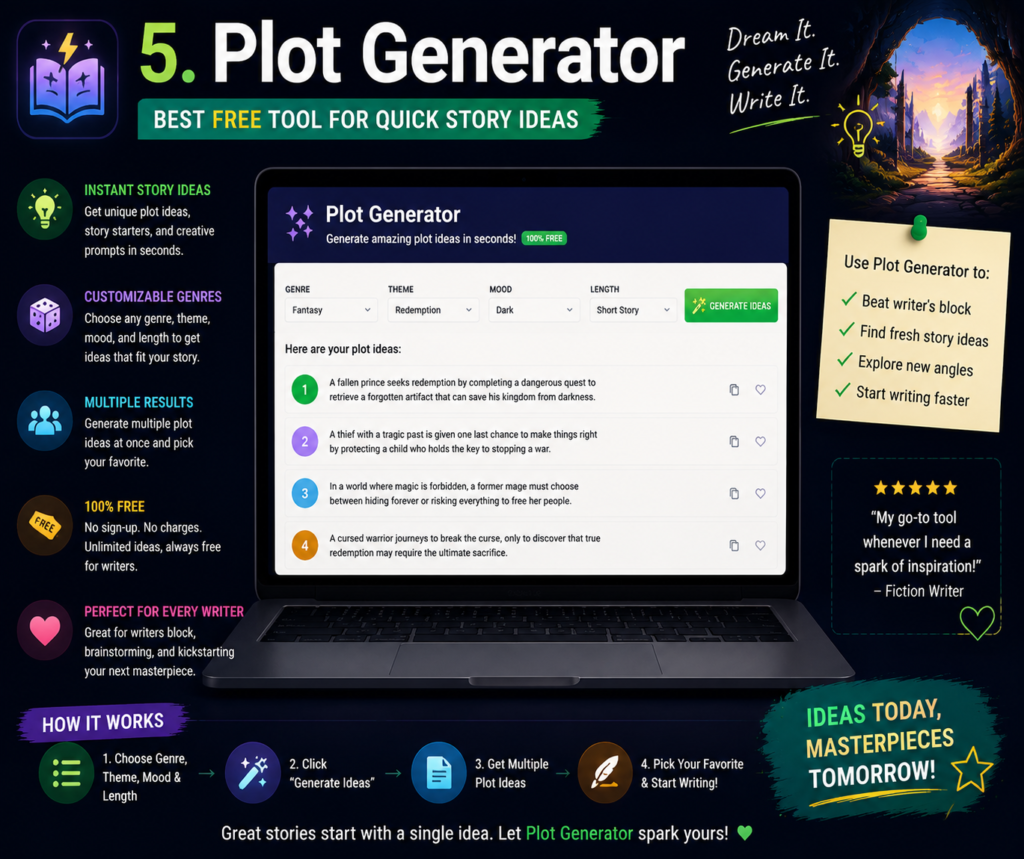
Plot Generator– An ideal tool to help you with quick inspirations. They can quickly generate story prompts, character ideas, plot twists, and endings to figure out how to start writing when you are suffering from writer’s block.
The tools are good for brainstorming or short-form creativity, not for writing full-blown novels.
- Core Feature: One-click random story idea generation
- Best Used For: Flash fiction, practice writing, and brainstorming
- Big Advantage: Free, simple, and beginner-friendly
Simple Ways to Keep Your Characters Consistent Throughout the Story
One of the easiest ways to lose readers is when a character suddenly feels different from chapter to chapter. If a brave character becomes afraid for no reason, or if a quiet character starts talking in a completely different way, the flow of the story can come to a screeching halt. Maintaining consistent characters is a way to ground your world in emotional reality.
- Read full comparison: https://bloggersta.com/jasper-ai-vs-copy-ai-2026-features-pricing/ Features, Pricing & Which Tool Is Better?
1. Build a Clear Character Profile
If you have your own approach, write down your character’s personality, fears, goals, habits, and beliefs before writing. Think of this as a quick reference to a “Character Bible” that you can refer to whenever you are going to be stuck.
- Core beliefs: What matters most to them?
- Emotional triggers: What makes them react strongly?
- Long-term goals: What are they chasing or avoiding?
2. Keep Their Dialogue Consistent
All character dialogue should be slightly different than each other. Pay attention to:
- Favorite words or phrases
- Tone (formal, sarcastic, nervous, calm)
- Sentence length and speaking style
- It is also very easy to identify inconsistencies if you read one character at a time separately.
3. Track Physical Habits and Details
Little details are more important than you think (more than most writers realize).
- Nervous habits or gestures
- Clothing style or appearance
- Repeated actions or body language
- Match Actions with Motivation
- Make characters make choices that fit their character and emotion. The story should necessarily tell us: if they suddenly behave differently.
4. Match Actions with Motivation
Characters must act according to their character and emotions. If they suddenly perform differently, the story must demonstrate it.
- Define what they want most
- Understand what they fear most
- Make emotional changes feel gradual, not random
5. Plan Character Growth Carefully
Characters can grow and change, but the transition should feel natural over time. Big personality shifts work best when they’re connected to important events, struggles, or emotional turning points in the story.
- Read full guide: 7 Best AI Writing Tools for Bloggers (Tried & Tested)
Frequently Asked Questions
1. Can I legally publish a story written by AI?
Yes, stories assisted by AI can be published. The majority of writers using AI is either for ideas, outlining, or editing, rather than writing the book 100%.
2. Will AI story generators replace human authors?
No. AI can assist with writing, but true emotion, creativity, and story still come from the writer.
3. Do traditional publishers accept AI-assisted books?
Yes, many do. But it’s important to check publishing contracts because some publishers now have AI-use rules.
4. What is a “Story Bible” and which AI tools use it?
A Story Bible collects all character notes, world-building notes, plot ideas, and other specific information that ensures consistency across stories. This is the same type of system used by tools like Sudowrite, NovelCrafter, or Squibler.
5. Are there 100% free AI story generators?
Yes, some tools have free versions when it comes to brainstorming and story ideas but usage limits are common.
Conclusion: The Future of Fiction Writing with AI Story Generators
Writing fiction is still an extremely intimate experience, and no AI story generator will ever replicate your imagination, emotions, or even your storytelling style. They can help when you’re stuck, tidy up messy thoughts, and make your longer writing efforts seem a bit less imposing.
The right AI book writer can save time, improve story flow, and help you stay consistent across chapters while still keeping your own creative voice at the center of the story.
Choose one of these tools (like Sudowrite or NovelAI) and write your next scene with that tool today. Sometimes it just takes one good prompt to kick the story into gear again.