
Making better videos is only half the battle. Getting those videos discovered is the other half and that is where many creators get stuck. kwrds.ai says YouTube has over 2 billion monthly active users and works as the world’s second-largest search engine, which makes smarter publishing workflows a real advantage. So, which are the best AI tools for YouTube channel growth in 2026?
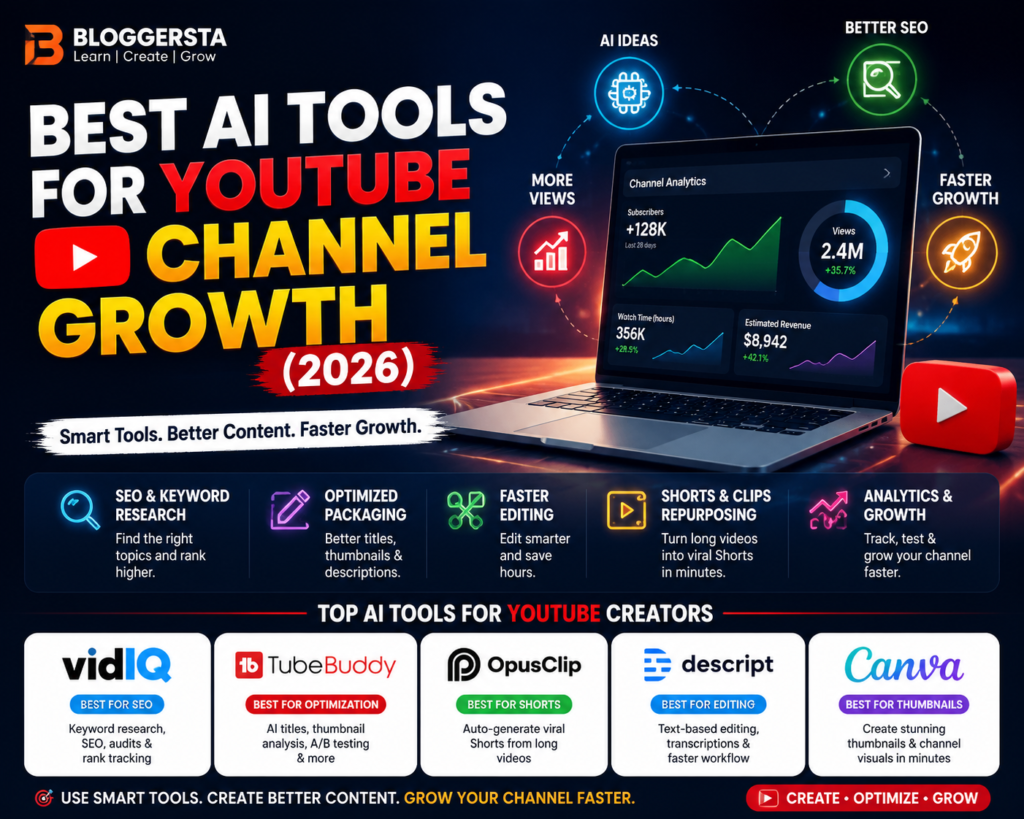
| Which AI Tools Are Best for YouTube Channel Growth in 2026? The best AI tools for YouTube channel growth help creators improve four things: topic discovery, packaging, production speed and content repurposing. No single tool does all of that perfectly, which is why the smartest setup usually combines one SEO-focused tool, one production tool and one visual tool. For most creators in 2026, the strongest mix includes vidIQ, TubeBuddy, Opus Clip, Descript and Canva. |
AI Tools for YouTube Growth at a Glance
What Makes an AI Tool Useful for YouTube Growth?
Useful YouTube AI tools does not magically grow a channel on its own. That is the first thing to understand. Growth usually comes from better ideas, better packaging, faster production and more consistent publishing. The right tool helps at one or two of these stages really well. The wrong one promises everything and delivers fluff.
That is why the best AI tools for YouTube growth are not always the flashiest ones. Think of them like a pit crew in a race. One handles tires, one handles fuel and one helps with timing. The car still needs a good driver but the team makes the whole run smoother.
- Topic research: Can it help find ideas viewers already search for? vidIQ’s YouTube SEO tools focus on keywords, search volume and competition data to help creators find topics worth targeting.
- SEO support: Can it improve titles, descriptions, tags and rankings? TubeBuddy highlights AI-generated titles, keyword optimization, search rank tracking and predictive features for that job.
- Packaging: Can it help you improve thumbnails or click-through rate?
- Editing speed: Can it save hours in the production process?
- Repurposing: Can it turn one long video into multiple clips, especially Shorts? AIR Media-Tech’s 2026 roundup includes Opus Clip among the tools helping creators grow faster through repurposing.
Also Read: Best AI Tools for Content Creators in 2026: The Master List
The 5 Best AI Tools for YouTube Channel Growth
Most creators do not need ten tools. They need a small stack that fixes the bottlenecks slowing them down. These five do that better than most.
vidIQ

If your biggest struggle is figuring out what to post and how to make it searchable, then vidIQ’s YouTube SEO tools are a strong place to start. vidIQ YouTube AI tool centers its workflow on keyword discovery, title and description optimization, channel audits and performance review, which makes it especially useful for search-led creators. It matters for growth because better topics and better metadata improve the odds of being discovered in YouTube Search and Suggested. Still, it is more about discoverability than editing or production.
- Best for: Creators who want better keyword research and YouTube SEO support.
- Why it stands out: It combines keywords, metadata generation, audits and performance insights in one workflow.
- Watch for: It helps you get found but it will not fix weak storytelling or low-retention videos.
TubeBuddy
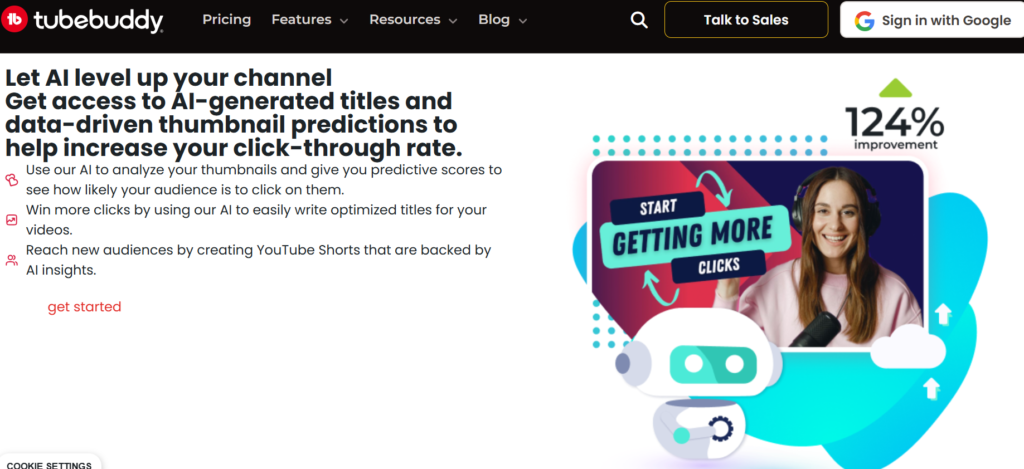
For creators obsessed with titles, thumbnails and optimization, TubeBuddy’s AI features offer a more packaging-focused route. TubeBuddy highlights AI-generated titles, thumbnail analysis, A/B testing, predictive analytics, rank tracking and keyword optimization, all of which matter when you are trying to improve click-through rate and refine what already works. In plain English, it helps you sharpen the wrapper around your content. However, it works best when you actually test and iterate instead of relying on the first suggestion.
- Best for: Channels focused on titles, thumbnail performance and optimization loops.
- Why it stands out: It offers packaging and testing tools that connect directly to growth levers like clicks and rankings.
- Watch for: It is more powerful for active creators who publish enough videos to learn from testing.
Opus Clip
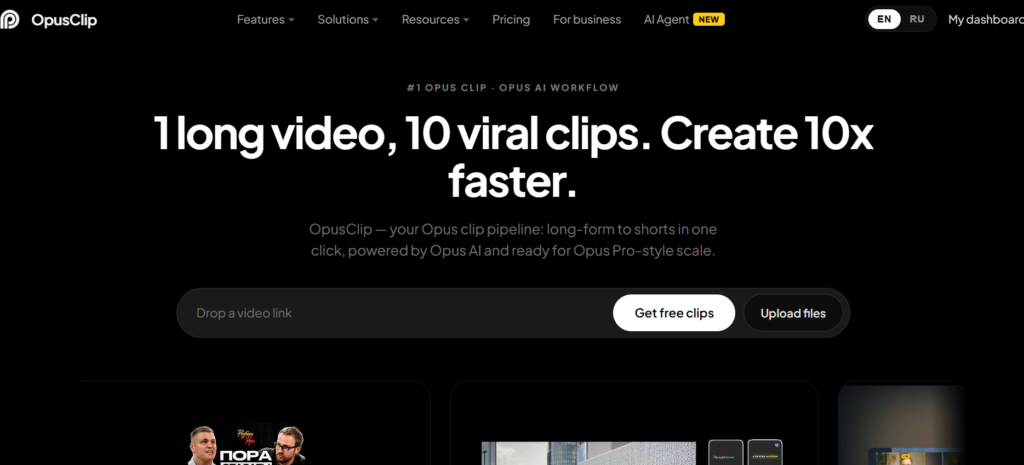
If you already create long-form videos and want more mileage from each upload, Opus Clip is one of the best AI tools for YouTube Shorts. According to AIR Media-Tech’s 2026 roundup, Opus Clip is part of the current tool stack helping creators automate parts of YouTube growth and improve workflow efficiency. This matters because one video can become multiple short clips that bring in fresh viewers from Shorts. That said, it shines most when your source content already has strong hooks and clear moments worth clipping.
- Best for: Creators who want to turn long-form content into Shorts.
- Why it stands out: It helps squeeze more reach from content you already made.
- Watch for: Bad source material still gives you bad clips. AI cannot invent a strong moment out of thin air.
Descript
Descript is not really a YouTube SEO tool. It is a production-speed tool and that is exactly why it belongs here. In current 2026 creator discussions and roundups, Descript keeps showing up as one of the go-to AI tools for faster editing and streamlined video workflows. For talking-head creators, educators and podcasters on YouTube, faster editing can mean publishing more consistently. And consistency, as boring as it sounds, is often where growth starts to snowball.
- Best for: Talking-head channels, tutorials, interviews and educational content.
- Why it stands out: It helps cut down editing friction so creators can publish faster.
- Watch for: It improves workflow but not keyword strategy or thumbnail performance.
Canva
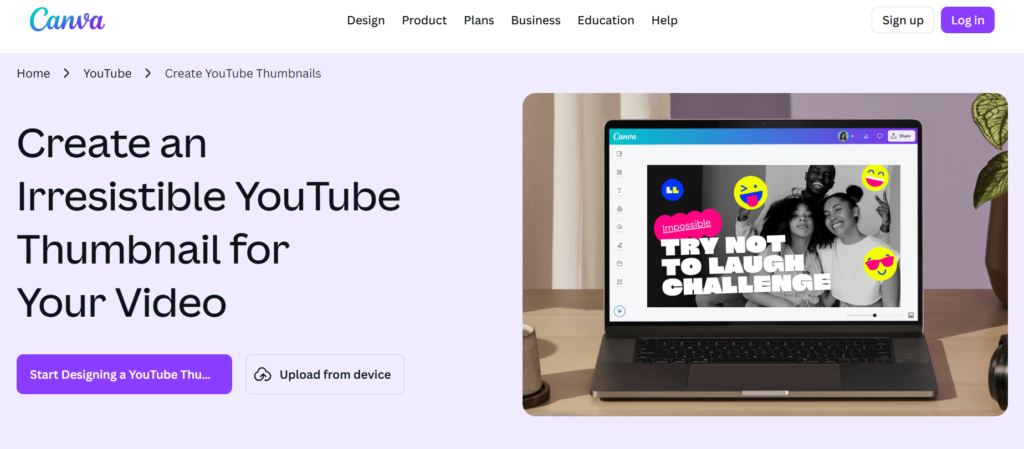
Canva earns its place because thumbnails still make or break clicks. Multiple 2026 YouTube AI tool roundups mention Canva as a key tool for thumbnails, visuals and channel assets used by creators trying to improve packaging. In other words, Canva helps with the first impression. That matters a lot when your video is sitting next to ten others on the same results page. It is simple, fast and accessible, though it is not built to handle SEO research or analytics.youtube+1
- Best for: Creators who want faster thumbnail design and visual branding.
- Why it stands out: It makes packaging easier without requiring advanced design skills.
- Watch for: It supports clicks visually but you still need strong topics and metadata.
Which AI Tool Is Best for YouTube SEO?
For pure YouTube SEO, vidIQ has the clearest edge. Its SEO toolkit focuses on keyword discovery, search volume, competition data, title and description generation and channel audits, which makes it well suited for creators who want to build content around search demand instead of guesswork. If your strategy is built around searchable topics, vidIQ is probably the best AI tool for YouTube channel growth in that lane.
TubeBuddy is the better fit when you care more about optimization after the idea stage. Its AI features include title generation, thumbnail analysis, A/B testing, keyword optimization and rank tracking, so it is stronger for refining packaging and performance over time. Put simply, vidIQ is stronger for discovery, while TubeBuddy is stronger for testing and presentation.
Which AI Tools Are Best for Thumbnails, Editing and Shorts?
For thumbnails, Canva is the easiest win because it helps creators design faster and package videos more clearly. For editing, Descript is a better fit because it reduces production friction, especially for channels built around spoken content. These are not vanity improvements. Better thumbnails and faster editing often lead to more uploads and better click-through rates.youtube+1
For Shorts, Opus Clip stands out because it helps repurpose long-form content into shorter pieces that can widen your reach. AIR Media-Tech’s 2026 coverage places Opus Clip among the tools helping creators automate and speed up YouTube workflows. That makes it especially useful for channels trying to turn one core video into several discovery assets.
How to Choose the Right AI Stack for Your Channel
The easiest mistake creators make is buying tools based on hype instead of bottlenecks. If you cannot find ideas, a thumbnail tool will not save you. If your uploads are great but nobody clicks, another editing app will not fix that either. Start where the leak is.
A small stack is usually enough. One tool for discovery, one for production and one for packaging can cover most needs. Beyond that, you are often just adding noise.
- Choose vidIQ: If search-led topics, keyword targeting and metadata matter most.
- Choose TubeBuddy: If you want more help with titles, thumbnails, testing and optimization.
- Choose Opus Clip: If one long-form video needs to become multiple Shorts.
- Choose Descript: If editing speed is your biggest bottleneck.
- Choose Canva: If thumbnail creation slows down publishing.
Also Read: 5 Best AI Caption Generators for Instagram and TikTok
Can AI Really Help Grow a YouTube Channel?
Yes but not in the lazy, push-a-button way people sometimes imagine. AI helps most when it improves speed, consistency, optimization and reuse. vidIQ frames YouTube SEO as a workflow built around keywords, metadata and performance review, while TubeBuddy focuses on titles, thumbnails, CTR and testing. Those are real growth levers.
Still, AI is an assistant, not an autopilot. It cannot replace a good topic, a strong first 30 seconds or a clear understanding of what your viewers actually care about. It can make a smart creator faster. It cannot make a weak strategy suddenly brilliant.
FAQs
What Are the Best AI Tools for YouTube Channel Growth in 2026?
The strongest 2026 stack for most creators includes vidIQ for SEO, TubeBuddy for packaging and testing, Opus Clip for Shorts repurposing, Descript for editing and Canva for thumbnails and visuals.
Can AI Really Help Grow a YouTube Channel?
Yes. AI can help with idea research, metadata, thumbnails, editing speed and repurposing, which all support growth when used well.
What Is the Best AI Tool for YouTube SEO?
vidIQ is the strongest fit for YouTube SEO because its workflow centers on keywords, search volume, competition, metadata optimization and audits.
Which AI Tools Are Best for YouTube Thumbnails and Editing?
Canva is a strong fit for thumbnails and channel visuals, while Descript is better for editing speed and production workflow.
Are AI Tools Worth It for Small YouTube Channels?
Yes, especially if they save time on the bottleneck that matters most. Small channels usually get the most value from one SEO tool and one production or packaging tool rather than an oversized stack.
Build a Small AI Stack That Fixes Your Real Bottleneck
You do not need five subscriptions just because five tools look impressive. The best AI tools for YouTube growth are the ones that fix the part of your workflow that keeps slowing you down. If ideas are weak, start with SEO. If editing takes forever, fix production first. If views come in but clicks do not, work on packaging.
That is the practical play. Pick one SEO tool and one production or packaging tool, use them for a few uploads and measure what changes. Growth is rarely magic. More often, it is just better systems repeated consistently.