AI has transitioned from an experimental curiosity into a routine component of content workflows. According to the 2026 AI Index, generative AI reached 53% population adoption within three years. The report also found that 70% of organizations use generative AI in at least one business function.
That growth makes AI writing tools easier to justify. The more difficult one is locating free AI blog writing tools that give enough benefit without making use of small trials or limited credits.
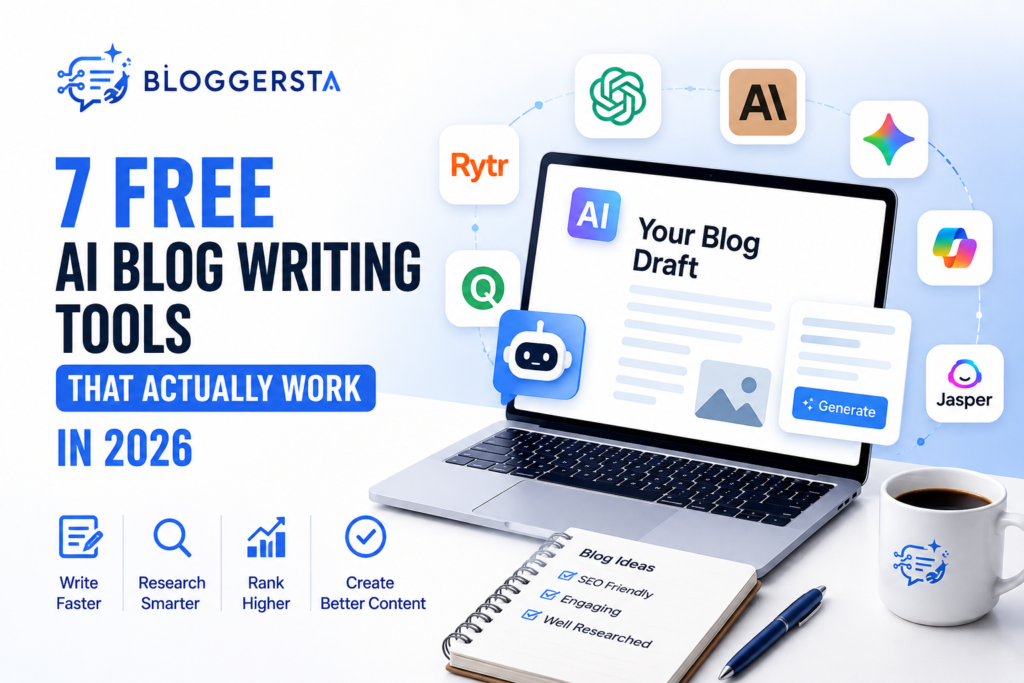
This guide contrasts seven real-life choices for bloggers, freelance writers, marketers, and website owners. It’s not about features; it’s about free access, blog quality, SEO value, usage limits, and upgrade pressure.
Quick Answer
| ChatGPT is the most versatile free AI blog writer for most users in 2026, with features such as writing, editing, search, upload, analysis, image generation, and GPTs, with usage restrictions. For any long-form drafts, Claude is an excellent option, and for bloggers who rely on Google’s ecosystem, Gemini is a good option. Jasper does not provide free access for the rest of time, but offers a trial period of only 7 days, and transforms into a paid subscription if not canceled. |
Key Takeaways
- ChatGPT’s writing capabilities have the highest overall value for free use.
- Claude stands out for natural-sounding long-form drafts.
- Gemini makes sense for Google-centric research workflows.
- Free access usually comes with usage limits, not unlimited generation.
- Jasper’s current offer is a trial, not a permanent free writing plan.
- AI can accelerate drafting without replacing fact-checking.
- The strongest workflow combines AI assistance with human editing.
Free AI Blog Writing Tools Compared
Different writers need different things from a free tool. A freelance writer may value generous chat access, while an SEO blogger may care more about research and content structure.
| Tool | Free Access | Best Feature | Blog Quality | Main Limitation |
| ChatGPT | Yes | Versatile writing workflow | Excellent | Usage limits vary |
| Claude | Yes | Natural long-form writing | Excellent | Limited free usage |
| Gemini | Yes | Google ecosystem | Very good | Free access has limits |
| Microsoft Copilot | Yes | Web-assisted writing | Very good | Less specialized for blogging |
| Rytr | Limited free access | Quick content generation | Good | Small allowance |
| QuillBot | Yes, with limits | Rewriting and editing | Good | Better for refinement than full blogs |
| Jasper | 7-day trial | Marketing workflows | Excellent | Not a permanent free plan |
The table reveals something many roundups overlook. “Free” describes access rather than production capacity. If you want to compare free options before paying for a subscription, start with these AI blog writers to understand what each platform does best.
How We Evaluated These Free AI Blog Writing Tools
Feature lists rarely reveal how useful an AI writer actually is. We focused on five practical factors.
1. Genuine Free Access: A permanent free plan is different from a temporary trial. This article therefore separates genuinely free tools from platforms that only let users test premium features temporarily.
2. Blog Quality: Content is not of quality based on word count. The focus is on structure, legibility, coherence, originality, and the amount of editing required for the draft. It may be more beneficial to have a shorter useful draft than 2,000 words of filler.
3. Research Capabilities: AI can produce convincing claims without verifying them. That makes research capability particularly important for AI blog writing. Writers should still verify statistics, product information, technical claims, and other important facts.
4. SEO Usefulness: An AI writer can stuff keywords in without good SEO content. A good SEO blog post should include search intent, helpful structure, topic depth, fact-checked content, and original value. Google emphasizes people-first content rather than pages created mainly to attract search traffic.
5. Upgrade Pressure: A free tool should provide enough functionality to accomplish something useful. If every important action immediately triggers an upgrade prompt, the free plan becomes less valuable.
1. ChatGPT — Best Overall Free AI Blog Writer
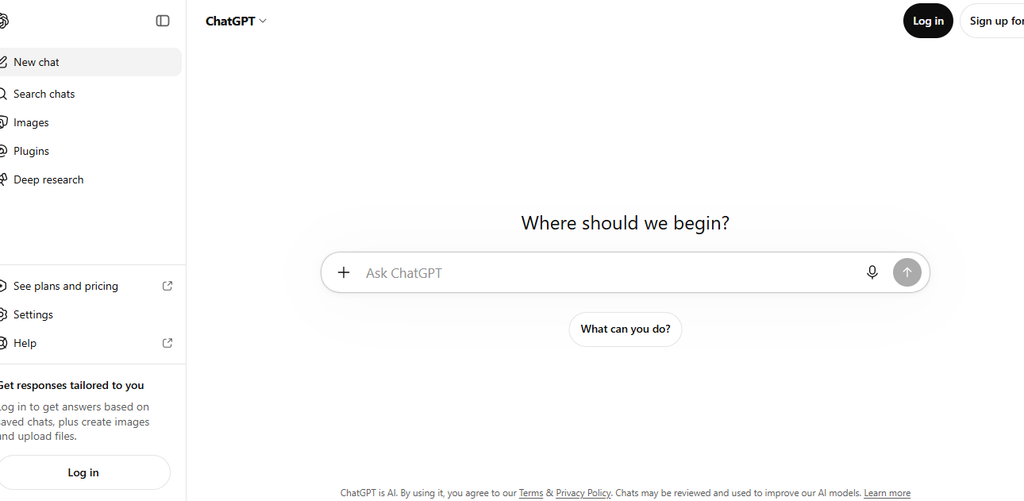
ChatGPT is the strongest all-round option because it supports more than basic article generation. Its free tier provides writing, editing, web search, file analysis, image generation, data analysis, and other capabilities. Usage limits apply to several features. That flexibility helps to create a useful end-to-end workflow. You can switch between Multiple tools to complete the topic research, outlining, drafting, rewriting, and content review.
Free Allowance
ChatGPT offers a $0 free tier. Exact limits can vary by model and feature. This makes a fixed “words per month” figure misleading. Modern AI platforms increasingly limit access by model usage rather than simple word counts.
Best Feature
Its strongest feature is workflow flexibility. You can use it to:
- Generate blog ideas
- Build article outlines
- Create first drafts
- Rewrite weak sections
- Analyze research
- Develop FAQs
- Improve headlines
- Review existing content
Blog Quality
ChatGPT performs best when you provide a detailed content brief. Include the audience, search intent, primary keyword, structure, evidence requirements, tone, and examples. This produces a more controlled AI-generated blog post than a generic “write an article” prompt. However, the draft should still receive human editing.
Limits
The main weakness is usage variability. Free users do not receive unlimited access to every advanced feature. ChatGPT is also not a dedicated SEO platform. You still need keyword research, SERP analysis, competitor research, and editorial judgment.
Best for: bloggers, freelancers, students, small publishers, and general content creators.
Verdict: Best overall free AI blog writing tool for flexible content workflows.
For a broader comparison of dedicated writing platforms, see our guide to the best AI tools for bloggers.
2. Claude — Best Free AI Writer for Long-Form Content

Claude is particularly useful when writing quality and long-form coherence matter. Its free plan supports writing, editing, content creation, analysis, and web search with limited usage.
Free Allowance
Claude has a genuine free tier. Usage is limited, making it more suitable for occasional writers than high-volume publishers.
Best Feature
Its standout quality is long-form coherence. Give Claude a detailed outline and supporting context. It can maintain an article’s central argument across several sections without making every paragraph feel disconnected.
Blog Quality
Claude can produce natural transitions and develop explanations. It works especially well for:
- Detailed guides
- Tutorials
- Product comparisons
- Educational articles
- Thought-leadership content
Still, fluent writing does not guarantee factual accuracy. Verify important claims before publication.
Limits
Free usage can become restrictive during multiple rounds of revisions. Claude also lacks the depth of a dedicated SEO platform. Keyword discovery, SERP analysis, and technical SEO still require separate tools.
Best for: long-form bloggers, writers, and users who prioritize polished prose.
Verdict: One of the best free AI writers for long-form content when usage remains moderate.
3. Gemini — Best Free AI Writer for Google Workflows
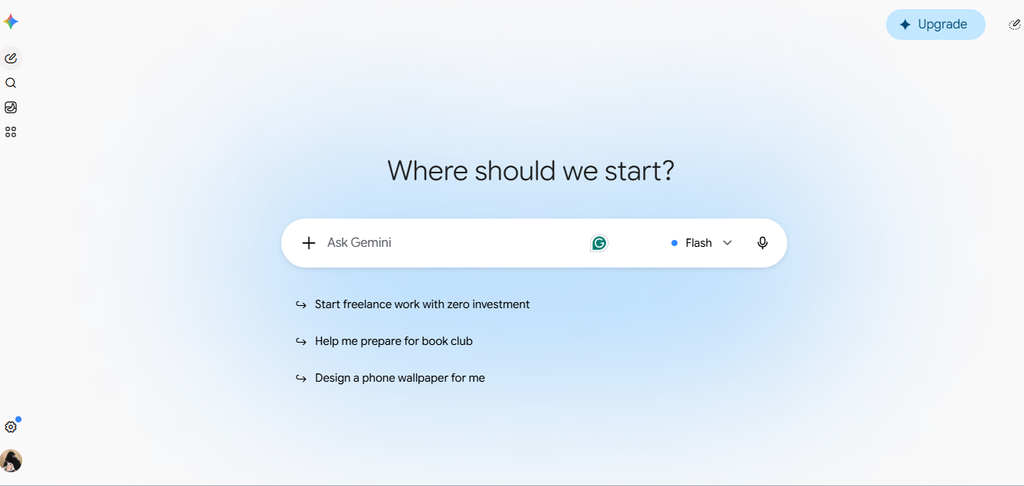
Gemini is particularly appealing to writers who already use Google’s ecosystem. Google separates its free Gemini access from paid AI plans. Paid tiers provide higher usage limits and additional capabilities.
Free Allowance
Gemini offers a free access route. Limits can vary by model, feature, and region. For that reason, avoid promising a fixed monthly word count unless you verify it before publication.
Best Feature
Its biggest advantage is its connection with Google’s broader ecosystem. That makes it useful for bloggers who want AI assistance alongside familiar Google workflows.
Blog Quality
Gemini can generate:
- Blog outlines
- Introductions
- Draft sections
- Summaries
- FAQs
- Content ideas
The quality improves significantly when you provide a detailed content brief. For SEO work, specify the audience, search intent, primary keyword, secondary terms, structure, and evidence requirements.
Limits
The free tier has lower usage capacity than Google’s paid AI plans. Gemini also should not replace specialist SEO software. Keyword research, backlink analysis, SERP research, and technical audits remain separate tasks.
Best for: Google users, bloggers, students, and content creators.
Verdict: A strong free AI blog writer for Google-centric workflows.
4. Microsoft Copilot — Best for Web-Assisted Writing
Microsoft Copilot is useful when current web context matters during brainstorming and drafting.
Free Allowance
Copilot has a free access route, although availability and limits can vary by account and feature.
Best Feature
Its strongest advantage is web-assisted research and drafting. You can use it to explore a subject before developing an outline or article.
Blog Quality
Copilot can create useful drafts, summaries, FAQs, and content ideas. Detailed prompts generally produce stronger results than broad requests. Always verify important facts independently.
Limits
Copilot is not a specialized SEO content platform. You may still need dedicated tools for keyword research, SERP analysis, content optimization, and technical SEO.
Best for: writers who want web-assisted brainstorming and drafting.
Verdict: A useful free option when research is part of your writing workflow.
5. Rytr — Best for Quick AI Blog Drafts
Rytr is designed around common writing tasks such as blog ideas, outlines, paragraphs, and marketing copy.
Free Allowance
Rytr offers limited free access. Its allowance makes it more suitable for occasional content than high-volume publishing.
Best Feature
Its strength is structured content generation. The dedicated writing interface reduces the prompt-building work required by general AI chatbots.
Blog Quality
Rytr can create useful outlines and first drafts. However, longer articles may become repetitive. Use it as a drafting assistant rather than publishing the output untouched.
Limits
The limited allowance is the main drawback. Frequent bloggers can reach the free ceiling quickly.
Best for: beginners, freelancers, and short-form content creators.
Verdict: A practical choice for quick AI-generated blog content.
6. QuillBot — Best Free AI Writing Tool for Editing
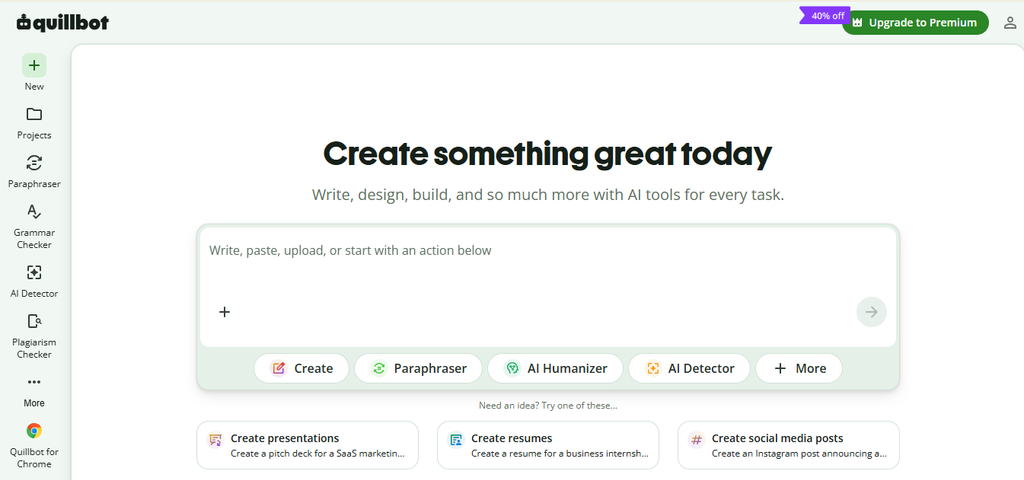
QuillBot takes a different approach. It is more valuable for improving existing text than for generating an entire article.
Free Allowance
QuillBot offers free access to several writing and editing functions with restrictions.
Best Feature
Its strongest capability is rewriting and refinement. You can improve awkward sentences, simplify dense passages, and reduce repetitive phrasing.
This creates an overlooked advantage. Instead of asking AI to create everything, you can keep your original ideas and use AI for editorial assistance.
Limits
QuillBot is not the strongest choice for producing a complete researched article from scratch.
Best for: bloggers, students, and writers who already have drafts.
Verdict: One of the better free tools for polishing AI blog content.
7. Jasper — Best for Testing Premium Marketing Workflows
Jasper requires an important clarification. It currently offers a seven-day trial rather than a permanent free plan. The trial requires a payment card and transitions into a paid subscription unless canceled.
Free Allowance
The current offer is primarily a trial. Therefore, it should not be considered a long-term free AI blog writer.
Best Feature
Jasper focuses heavily on marketing workflows, brand consistency, and business content production.
Blog Quality
Its value is stronger for organized marketing workflows than for basic paragraph generation.
Limits
The biggest limitation for this comparison is the cost after the trial.
Best for: marketing teams and businesses evaluating paid AI content platforms.
Verdict: Useful for testing premium features but not ideal for readers seeking genuinely free blogging tools.
What Free AI Writers Usually Get Wrong
Even the best free AI writer can create weak content when its output goes directly to publication.
- Hallucinated Facts: AI can produce confident statements without reliable evidence. Verify statistics, technical claims, product specifications, and current information.
- Repetitive Writing: AI-generated content can explain the same point several times. Remove repeated ideas rather than padding the article to meet a word count.
- Weak Research: A fluent paragraph can still lack meaningful evidence. Add authoritative sources, original examples, expert insights, and firsthand observations.
- Generic Conclusions: Many AI drafts end with vague advice. A stronger conclusion gives readers a clear next action.
How to Improve a Free AI Blog Draft
A free AI writer becomes much more valuable when you treat the output as raw material.
Step 1: Define Search Intent
Know the reader’s intentions before creating content.
Step 2: Build a Detailed Brief
Add the main keyword, audience, headings, tone, evidence, and secondary keyword.
Step 3: Add Original Insights
Use examples, own observations, comparisons, screenshots, or expert comments.
Step 4: Fact-Check Important Claims
Check statistics, pricing, features, and other data that may vary.
Step 5: Remove AI Repetition
Eliminate repetitive phrases and unnecessary explanations.
Step 6: Optimize for Readers
Use keywords naturally, emphasizing usefulness, clarity, and search intent.
Google says there’s no special algorithmic preference for AI-generated content. Instead, its guidance focuses on the content that is beneficial, reliable, and people-focused.
Final Verdict: Which Free AI Writer Should You Use?
This will depend on your publishing requirements. Overall, ChatGPT is the best option for flexible blogging. Claude is ideal for longer text, while Gemini is useful for Google-centric tasks. Copilot is suitable for web-assisted drafting. Rytr is helpful for quick content, and QuillBot excels at editing. The exception is Jasper. Its seven-day trial makes it useful for testing premium marketing features but not for permanent free use.
The best approach is to test one article for free and then choose the tool that works best for you. Assess the quality of a draft, time to edit, research needed, and limits of use. Only upgrade when there is an actual free tool that is becoming a limiting factor.
Once your blog is ready, you can also turn the same content into videos and social posts using AI content repurposing tools.
You can also turn written content into engaging videos with Revid AI or explore Pictory AI for text-to-video workflows.
FAQs About Free AI Blog Writing Tools
What is the best free AI blog writing tool?
ChatGPT is the strongest overall option for most users. Claude is an excellent alternative for long-form writing.
Can I write a complete blog post with AI for free?
Yes. Several tools can help create complete drafts without requiring payment. Usage limits may restrict how frequently you can generate long articles.
Is there a completely free AI blog writer?
Yes. Several platforms offer ongoing free tiers. Most still restrict messages, characters, models, or advanced features.
Are free AI writers good for SEO?
They can help with search engine optimization (SEO) optimized content, but AI cannot guarantee rankings. Search intent, search accuracy, search originality, and search usefulness are still significant.
Can AI-generated blogs rank on Google?
Yes. Using AI does not automatically prevent content from ranking. Google focuses on providing content that is helpful and reliable, not on whether it was produced using AI.
Conclusion
AI blog writing tools can save a lot of time in the research, outlining, drafting, and editing of blog posts. But when it comes to effective content, the key is to leverage AI as a writing assistant, not a standalone tool to replace editorial input. Use ChatGPT for versatility or Claude for longer content. Try Gemini if Google’s ecosystem fits your workflow. Then test the tool on a real article before deciding whether you need a paid plan.
For more AI-powered content strategies and tools, explore Bloggersta and find the workflow that fits your publishing goals.