
Writing a strong blog post now involves far more than producing words quickly. AI blog writing tools can research topics, build outlines, draft sections, optimize keywords, and accelerate editing. The real question is whether they can do those jobs without leaving you with bland or unreliable content.
That matters because AI has become a mainstream part of marketing. HubSpot’s 2026 research found that 80% of marketers use AI for content creation. Its blogging research also found that only 4% of bloggers never use AI during content creation.
So which tools actually deserve your workflow?
Quick Answer
Writesonic is the strongest all-around choice for bloggers who want research, writing, SEO, and publishing features in one workflow.
However, your best choice depends on the job:
- Best overall: Writesonic
- Best for SEO: Surfer AI
- Best for brand voice: Jasper
- Best for research: Frase
- Best for content workflows: Copy.ai
- Best budget option: Rytr
- Best for SEO planning: Scalenut
- Best for performance-focused content: Anyword
- Best for fast niche publishing: KoalaWriter
The best AI blog writer is therefore not necessarily the one producing the longest article. It is the one that reduces the most manual work without sacrificing editorial judgment.
Key Takeaways
- AI writers are most useful when paired with human editing.
- SEO capabilities vary considerably between platforms.
- Research quality matters as much as writing fluency.
- Brand voice tools are valuable for teams with strict style guidelines.
- WordPress publishing can remove several repetitive workflow steps.
- Google allows AI-assisted content when it provides genuine value.
- Mass-producing low-value pages with AI can violate Google’s spam policies.
Best AI Blog Writers at a Glance
| Tool | Best For | SEO | Research | Brand Voice | Publishing |
| Writesonic | Overall | ★★★★★ | ★★★★★ | ★★★★☆ | ★★★★☆ |
| Surfer AI | SEO content | ★★★★★ | ★★★★☆ | ★★★★☆ | ★★★★☆ |
| Jasper | Brand voice | ★★★★☆ | ★★★★☆ | ★★★★★ | ★★★☆☆ |
| Frase | Research | ★★★★★ | ★★★★★ | ★★★☆☆ | ★★★☆☆ |
| Copy.ai | Workflows | ★★★★☆ | ★★★★☆ | ★★★★☆ | ★★★☆☆ |
| Rytr | Budget writing | ★★★☆☆ | ★★★☆☆ | ★★★★☆ | ★★☆☆☆ |
| Scalenut | SEO planning | ★★★★★ | ★★★★☆ | ★★★☆☆ | ★★★☆☆ |
| Anyword | Performance copy | ★★★★☆ | ★★★☆☆ | ★★★★★ | ★★★☆☆ |
| KoalaWriter | Fast niche blogs | ★★★★☆ | ★★★★☆ | ★★★☆☆ | ★★★★★ |
Features and pricing can change. Check the vendor’s current plan before subscribing.
How We Evaluated AI Blog Writers
A useful comparison needs more than feature counting. For this guide, the tools are judged around the actual blogging workflow. That includes topic research, outlining, drafting, optimization, editing, and publication.
1. Writesonic — Best Overall

Writesonic is the strongest all-rounder for bloggers who want several content tasks under one roof. Its Article Writer supports long-form content workflows. Its newer tools also emphasize research, citations, internal linking, SEO, and content optimization.
Best for
Bloggers, marketers, agencies, and businesses produce SEO-focused content regularly.
Main features
- Long-form article generation
- SEO optimization
- Keyword research
- Source citations
- Internal linking
- Content optimization
- AI search visibility features
- Article publishing workflows
Writing quality
Writesonic works particularly well when you provide a detailed brief. The output becomes more useful when the writer supplies audience information, search intent, structure, and supporting sources.
SEO capabilities
This is one of its strongest areas. Its SEO Suite includes keyword research and internal-linking functionality.
Strengths
- Broad blogging workflow
- Strong SEO toolkit
- Research-focused features
- Useful internal linking
- Good fit for professional publishers
Weaknesses
- Advanced features can make the platform feel complex.
- Higher-tier workflows may be excessive for occasional bloggers.
2. Surfer AI — Best for SEO
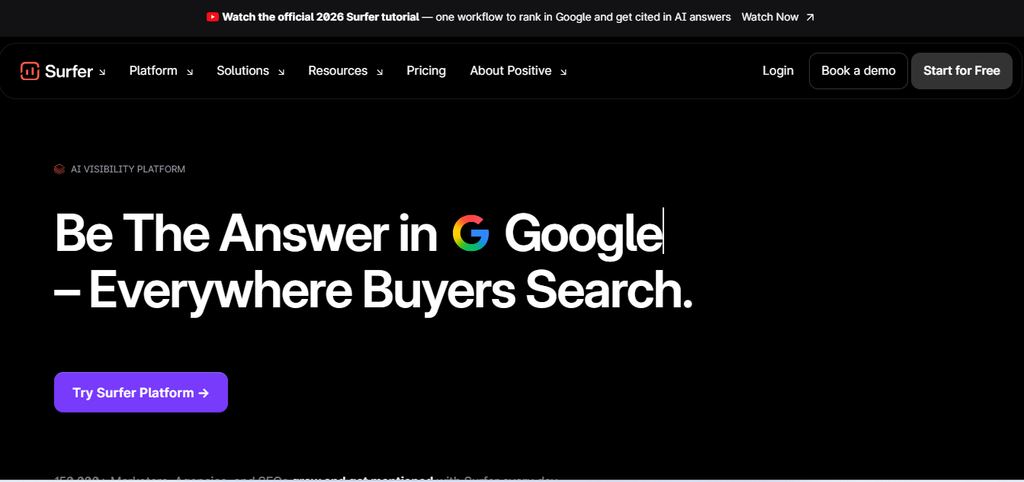
Surfer is particularly useful when organic search performance sits at the center of your content strategy. Its main advantage is not simply generating text. It focuses heavily on SERP analysis, keyword coverage, content optimization, and SEO-driven structure.
Best for
SEO professionals, affiliate publishers, and businesses targeting competitive keywords.
Main features
- Content optimization
- SERP analysis
- Keyword recommendations
- SEO content generation
- Content scoring
- Topic coverage
Writing quality
Surfer’s biggest value comes from optimization rather than literary finesse. Many users will still want to reshape the introduction, examples, transitions, and conclusions manually.
SEO capabilities
This is where Surfer shines. It helps writers think beyond one target keyword and consider broader topical coverage.
Strengths
- Excellent SEO orientation
- Useful optimization guidance
- Strong fit for search-focused workflows
Weaknesses
- Can feel too SEO-centric for purely editorial blogs.
- Human editing remains necessary for a distinctive voice.
3. Jasper — Best for Brand Voice
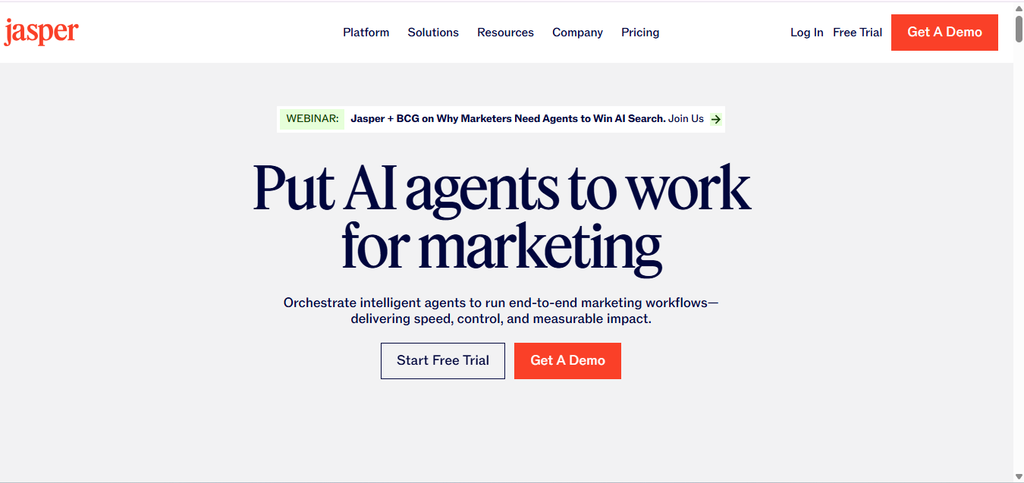
Jasper has evolved beyond basic text generation. Its strongest differentiator is helping marketing teams maintain consistent messaging.
Best for
Marketing teams, agencies, and established brands.
Main features
- Brand voice
- Marketing content workflows
- Knowledge assets
- Content creation
- Campaign support
Writing quality
Jasper becomes more valuable when it has enough information about your company. That context can help reduce the generic tone common in AI drafts.
SEO capabilities
It can support SEO-oriented content creation. Yet its greatest advantage remains brand consistency rather than pure SEO optimization.
Strengths
- Strong brand-voice controls
- Useful for teams
- Good marketing orientation
- Consistent terminology
Weaknesses
- May be expensive for casual bloggers.
- Some features are unnecessary for simple blog drafting.
4. Frase — Best for Research
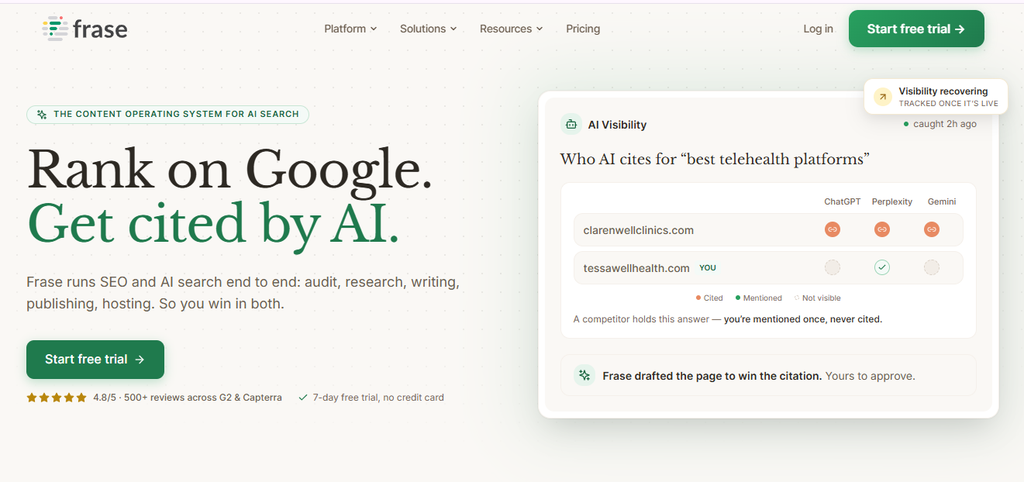
Frase takes a research-first approach to content creation. That makes it particularly useful when the difficult part is figuring out what an article should cover before writing it.
Best for
SEO writers, researchers, and content strategists.
Main features
- SERP research
- Content briefs
- Topic analysis
- SEO optimization
- AI writing
- Content scoring
Writing quality
Its real strength appears before the drafting stage. Better research inputs generally produce more useful drafts.
SEO capabilities
Frase is strong for identifying important topics and structuring content around search intent.
Strengths
- Excellent research workflow
- Useful content briefs
- Strong SEO orientation
Weaknesses
- Less compelling if you only need a basic writing assistant.
- Some writers may prefer a separate AI model for final prose.
5. Copy.ai — Best for Content Workflows
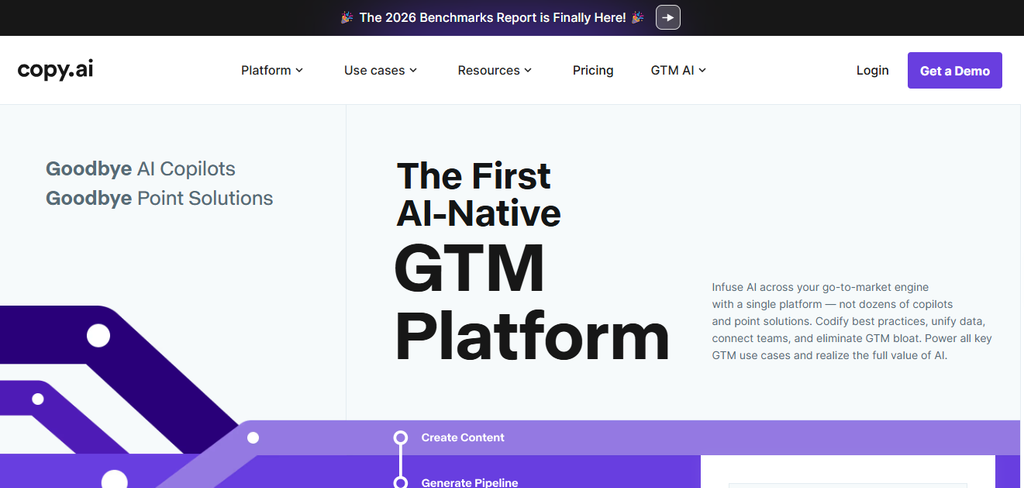
Copy.ai is particularly interesting for teams that need repeatable content processes.
Instead of treating AI purely as a writing box, it emphasizes workflows and operational automation.
Best for
Content teams, marketers, and businesses handling repetitive content tasks.
Main features
- Workflow automation
- Content generation
- Brand information
- Marketing copy
- Team collaboration
Writing quality
Output quality depends heavily on the workflow and instructions provided. Strong inputs usually produce better results than generic prompts.
SEO capabilities
Copy.ai can assist with content creation. However, dedicated SEO platforms may provide deeper optimization controls.
Strengths
- Workflow automation
- Useful for teams
- Flexible content processes
Weaknesses
- Can be more complicated than necessary for solo bloggers.
- SEO is not its sole specialty.
6. Rytr — Best Budget Option
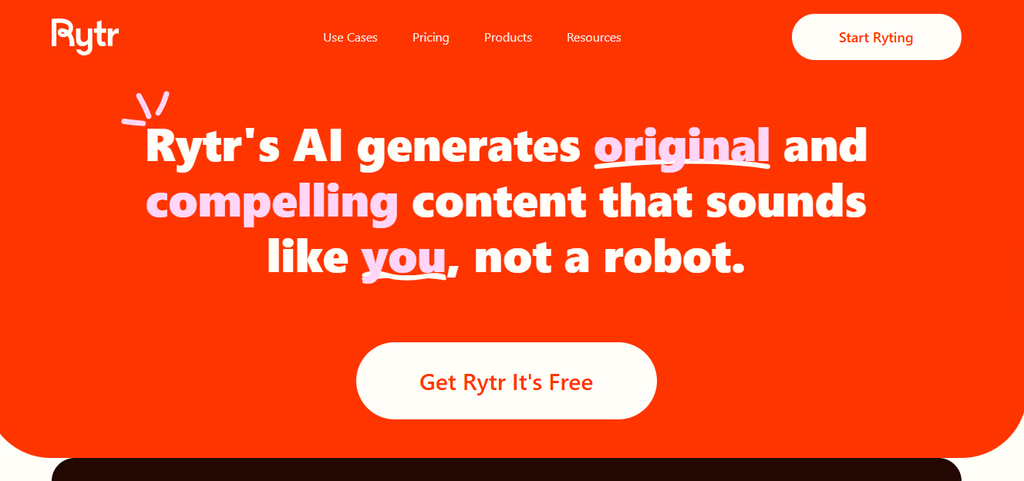
Rytr is designed for users who want straightforward AI writing without an elaborate content ecosystem.
Best for
Beginners, freelancers, and occasional bloggers.
Main features
- AI drafting
- Content templates
- Rewriting
- Tone options
- Short-form and long-form assistance
Writing quality
Rytr can create useful first drafts. More sophisticated articles will usually need stronger research and human editing afterward.
SEO capabilities
Its SEO capabilities are adequate for basic workflows. Dedicated SEO platforms offer deeper analysis.
Strengths
- Beginner-friendly
- Simple interface
- Budget-conscious positioning
Weaknesses
- Less advanced research
- Fewer comprehensive publishing workflows
7. Scalenut — Best for SEO Planning

Scalenut combines content planning with AI-assisted writing. Its appeal lies in helping writers move from keyword research toward a structured content plan.
Best for
SEO-focused bloggers and content marketers.
Main features
- Keyword planning
- Topic research
- Content briefs
- SEO optimization
- AI writing
Writing quality
The platform is more compelling when used as part of a structured SEO workflow rather than as a replacement for editorial judgment.
Strengths
- Strong SEO planning
- Useful content structure
- Keyword-focused workflow
Weaknesses
- The interface may take time to learn.
- Casual writers may not need its full toolkit.
8. Anyword — Best for Performance-Focused Content
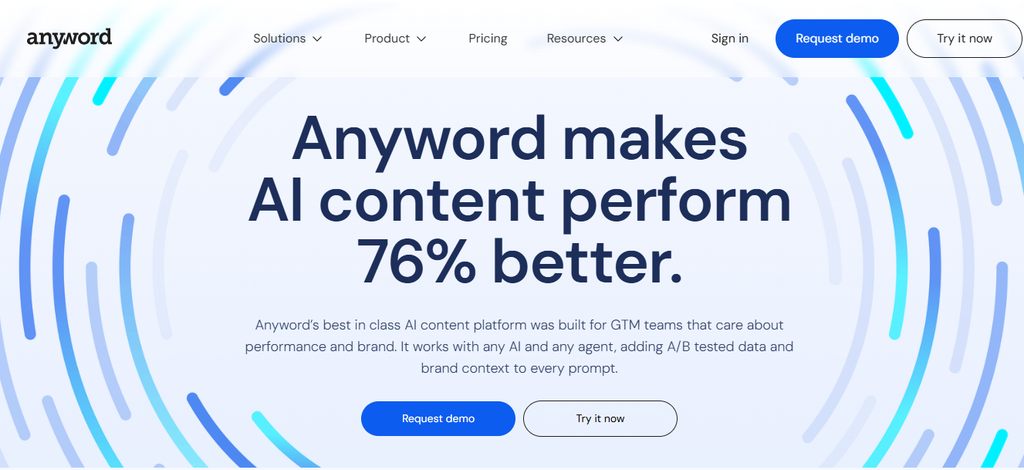
Anyword is particularly useful when content performance and messaging are closely connected.
Best for
Marketers, advertisers, and businesses are testing different messaging approaches.
Main features
- Brand voice
- Content generation
- Marketing copy
- Performance-oriented insights
- Audience-focused writing
Writing quality
Its marketing orientation can help produce sharper commercial copy. Pure editorial bloggers may not need all of those capabilities.
Strengths
- Strong marketing focus
- Brand consistency
- Performance orientation
Weaknesses
- Less specialized for deep editorial research.
- Can be excessive for simple blog posts.
9. KoalaWriter — Best for Fast Niche Blogs
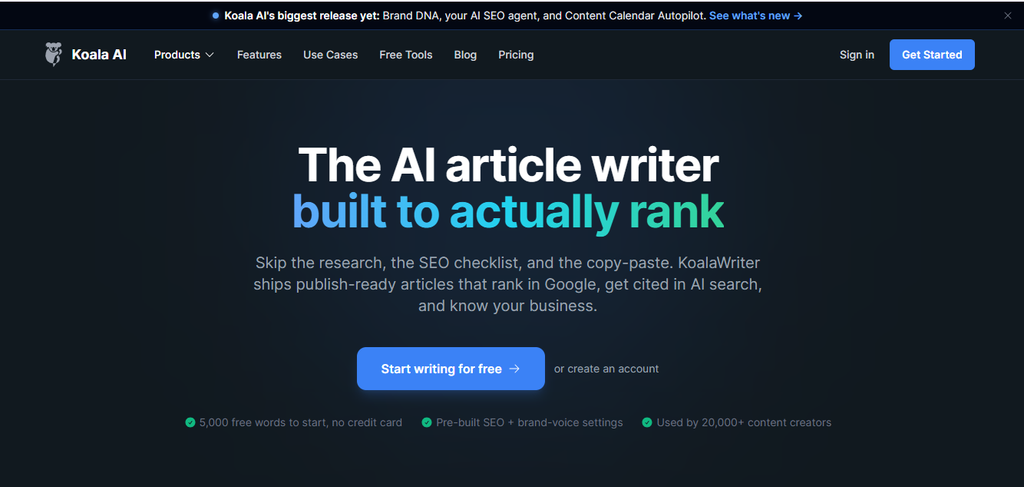
KoalaWriter appeals to publishers who want a streamlined path from topic to finished article.
It is particularly relevant to niche and affiliate publishers producing informational content at a regular cadence.
Best for
Affiliate bloggers, niche-site publishers, and high-frequency content creators.
Main features
- Long-form writing
- SEO-focused generation
- Research assistance
- Internal links
- Publishing integrations
Writing quality
Its speed is a major attraction. However, fast generation should not become an excuse to skip fact-checking or editorial review.
Strengths
- Fast workflow
- Niche-blog friendly
- Publishing-oriented features
Weaknesses
- Generated drafts still require review.
- Brand-heavy businesses may prefer stronger voice controls.
For creators who also produce audio content, our guide to AI tools for podcasters can help you explore tools for another content format.
AI Blog Writer vs. General AI Assistant
There is an important distinction between an AI blog writing tool and a general AI assistant.
A general assistant is usually better for flexible tasks. You can brainstorm ideas, rewrite paragraphs, analyze information, or create custom prompts.
A dedicated blog platform usually provides more structure. It may combine keyword research, content briefs, SEO optimization, internal linking, source gathering, and publishing.
That difference matters when blogging becomes a recurring workflow.
If you publish one article occasionally, a general AI assistant may be enough. If you publish dozens of SEO articles every month, a dedicated platform can remove considerable friction.
If you are building a wider content workflow, you may also want to explore our guide to the Best AI Tools for Affiliate Marketing Content in 2026. It covers tools that support writing, content planning, video creation, and other parts of the creative process.
Which AI Blog Writer Is Best for SEO?
Surfer AI is the strongest choice when SEO optimization is your central requirement.
However, there is no magical SEO button.
A useful SEO workflow still requires:
- Understanding search intent.
- Researching the topic.
- Building a useful structure.
- Covering relevant subtopics.
- Adding original insights.
- Checking factual claims.
- Creating useful internal links.
- Editing the final article.
- Monitoring search performance.
Google’s current guidance emphasizes helpful, reliable, people-first content rather than mass-produced pages.
That means the best ai blog writer should support your editorial process rather than replace it.
Which Is Best for Beginners?
Rytr is the easiest starting point among these options.
Beginners generally benefit from a simple interface and a straightforward generation process. They can learn prompting, outlining, editing, and fact-checking without navigating an enormous content suite.
Writesonic is a better choice when beginners want to grow into a more complete SEO workflow.
Which Is Best for WordPress Bloggers?
Writesonic and KoalaWriter deserve the closest look if publishing efficiency is important.
WordPress bloggers should examine more than direct publishing. Check whether the platform handles formatting, internal links, metadata, images, citations, and other publishing details.
A direct publishing button saves time. A reliable pre-publication workflow saves much more.
If you regularly turn blog posts into email campaigns, see our guide to AI tools for newsletter writers.
Want to Turn Blog Posts Into Videos?
Publishing a blog post does not have to be the final step. Strong articles can also become short videos, social clips, and other visual assets that reach people outside traditional search results.
For short-form social content, you can try Revid AI. It is particularly relevant for creators who want to turn ideas, text, links, or existing content into videos for platforms such as YouTube Shorts, Instagram Reels, and TikTok.
You can also explore Pictory AI if you want to convert written content into video-based assets. This approach can help bloggers give a successful article a second life instead of relying on one publishing format.
Final Verdict
There is no universal winner among AI blog writing tools.
Writesonic is the strongest overall choice for publishers seeking a broad blogging workflow. It combines research, article creation, SEO features, citations, and internal-linking capabilities in one ecosystem.
Choose Surfer AI when SEO is the priority. Choose Jasper when brand voice matters most. Pick Frase when research and content briefs are slowing you down.
For beginners, Rytr offers a simpler entry point. Niche publishers may prefer KoalaWriter for a faster publishing workflow.
The bigger lesson is simple: don’t ask AI to replace your editorial process. Use it to strengthen that process.A good AI blog writer can save time. A thoughtful writer makes the final article worth reading.
Create videos from your content with Revid AI.
Frequently Asked Questions
What is the best AI blog writer in 2026?
Writesonic is the strongest overall option for many bloggers. Surfer AI is better when SEO optimization is the primary requirement, while Jasper is stronger for brand voice.
Can AI write an entire blog post?
Yes. Modern tools can generate complete long-form drafts from a topic or detailed brief. However, writers should fact-check, edit, add original insights, and verify sources before publishing.
Are AI blog writing tools good for SEO?
They can support SEO research, structure, keyword coverage, and optimization. They do not automatically make content useful or authoritative. Google’s guidance focuses on valuable, people-first content rather than the method used to create it.
What is the best AI blog writer for beginners?
Rytr is a straightforward option for beginners. Writesonic is worth considering if you want a more comprehensive SEO and publishing workflow.
Can AI blog writers publish to WordPress?
Some platforms provide WordPress-related publishing capabilities or integrations. Check the current documentation before subscribing because integrations can change.
Should I use an AI writer instead of a human writer?
Usually, the strongest approach is to combine both. AI can accelerate research, outlining, drafting, and editing while humans provide expertise, judgment, originality, and fact checking.
Ready to Build Better Content?
Choosing an AI writing tool is only one part of a successful blogging strategy. The bigger advantage comes from combining keyword research, useful content structure, strong on-page SEO, human editing, and consistent publishing.
For more practical guides on AI tools, SEO, and content creation, explore Bloggersta and use its resources to build a more efficient content workflow.v
2 Responses