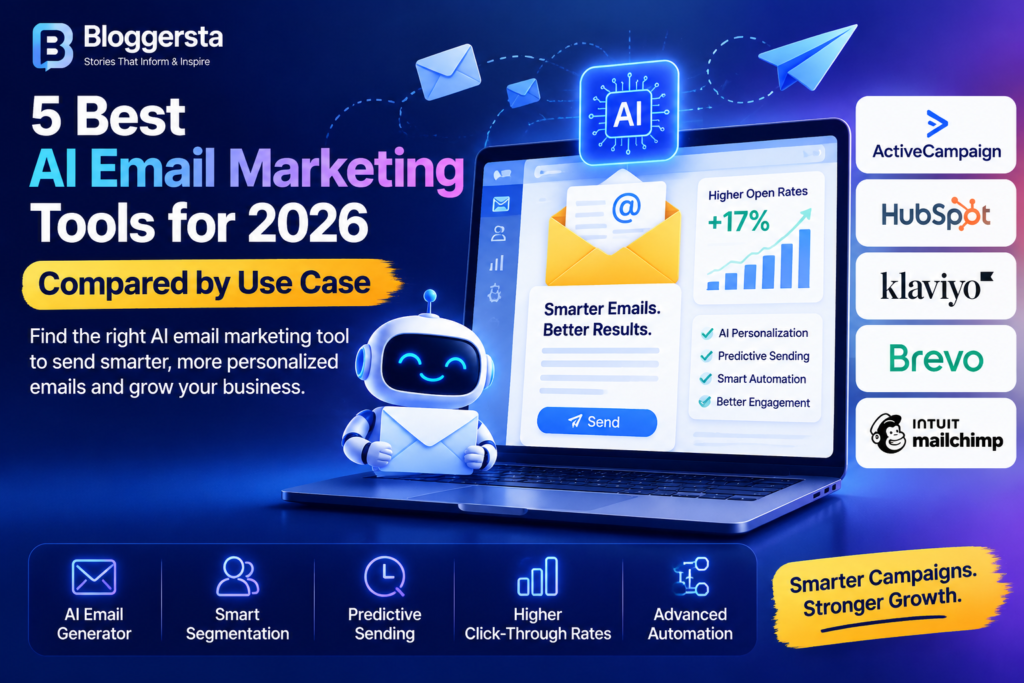
Sending every subscriber the same email at one fixed time is a little like fishing with one net. ActiveCampaign reports that predictive sending can lift click-through rates by 17%, although that is vendor-reported data. Which AI email marketing tools actually suits your business in 2026?
Quick Answer
The best AI email marketing tools are ActiveCampaign for advanced automation, HubSpot for CRM-led B2B marketing, Klaviyo for ecommerce retention, Brevo for affordable multichannel campaigns and Mailchimp for beginners. These platforms can draft emails, segment subscribers, predict timing and trigger campaigns. However, your customer data, list size, budget and sales process should guide the final choice.
What Makes an AI Email Marketing Tool Worth Using?
An AI email generator is handy. Still, good AI email marketing software does more than write subject lines in seconds. The stronger platforms learn from email engagement, purchase behavior, customer profiles and lifecycle stages. That helps you send useful messages instead of adding more noise to an already crowded inbox.
- Useful AI: Learns from engagement, buying patterns and customer behavior.
- Weak AI: Produces generic copy without understanding your audience.
- Good automation: Sends timely emails after actions that matter.
- Human review: Catches incorrect offers, awkward tone and broken links.
For example, ActiveCampaign’s predictive sending feature uses each contact’s past engagement habits to select a likely send time. That is far more useful than guessing whether 9:00 a.m. works for everyone.
How We Compared AI Email Marketing Platforms
A local service business may want easy templates and a low monthly bill. An ecommerce store needs cart recovery, purchase triggers and smart retention campaigns. Meanwhile, a B2B company may care more about CRM data, deal stages, lead scoring and sales handoffs.
We compared each AI email marketing platform based on:
- Automation depth and trigger choices
- AI email personalization features
- CRM, store and customer-data connections
- Pricing as subscriber lists grow
- Ease of daily use
- Email, SMS and multichannel options
We compare workflow fit, not promises of overnight sales growth. A flashy dashboard cannot fix a weak offer or a neglected email list.
Best AI Email Marketing Tools Compared
Every platform solves a different problem. Some build complex customer journeys, while others make your first campaign less intimidating or turn ecommerce data into smarter retention messages.
ActiveCampaign: Best for Advanced Automation
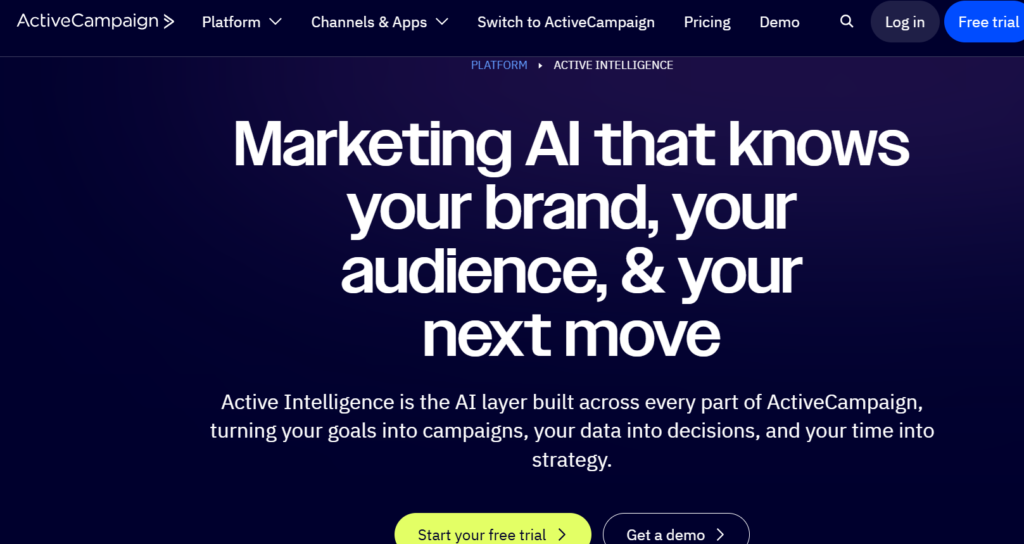
ActiveCampaign is a strong pick for businesses with layered customer journeys. Its AI email automation tools support predictive sending, segmentation, lead scoring and multi-step workflows. It works best when your list has enough activity for the platform to learn from real engagement patterns.
- Best for: Businesses with lifecycle campaigns and growing lists
- AI feature: Predictive sending and AI-assisted automation building
- Watch out for: Setup takes time, especially for beginners
Imagine a fitness brand. A new subscriber gets a welcome email. A buyer receives care tips. A repeat customer gets a loyalty offer. ActiveCampaign lets you map those branches without juggling five different tools. Its predictive sending can also schedule emails based on habitual open times, rather than a blanket time zone setting.help.activecampaign+1
HubSpot Marketing Hub: Best for CRM-Led B2B Email
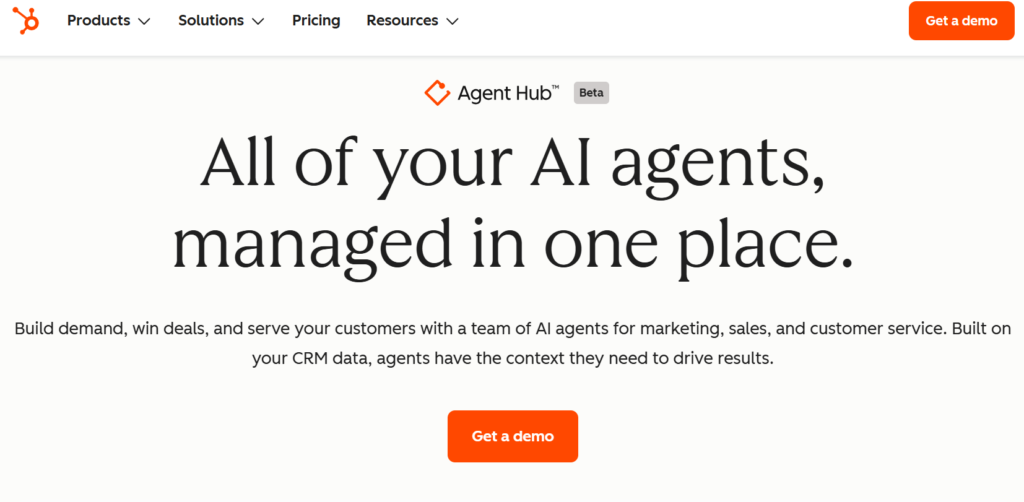
HubSpot Breeze suits B2B teams that already manage contacts, deals, forms and sales activity in HubSpot. Its advantage is not merely an AI email subject line generator. Breeze can work with CRM context, helping marketing and sales teams build campaigns that reflect lead stage and past activity.knowledge.
- Best for: B2B businesses with aligned sales and marketing teams
- AI feature: Breeze Assistant and CRM-aware campaign support
- Watch out for: Costs can climb as teams add hubs, contacts and seats
For instance, a SaaS company can email a trial user differently from a prospect who booked a demo but never attended. That context matters. If your team also runs outbound sequences, Bloggersta’s guide to AI SDR tools for B2B sales teams can help you connect email marketing with prospecting workflows.
Klaviyo: Best for Ecommerce Retention
Klaviyo is built for ecommerce brands that want to use customer behavior instead of sending one-size-fits-all promotions. Its predictive analytics can estimate customer lifetime value, churn risk, expected next order date and anticipated spending for eligible accounts. That gives marketers better material for win-back, VIP and replenishment emails.
- Best for: Ecommerce stores with order history and customer data
- AI feature: CLV, churn and purchase-behavior predictions
- Watch out for: Predictions need sufficient data before they become available
A skincare store could send a refill reminder to a customer nearing their likely reorder date. Meanwhile, a high-value shopper might receive early access to a bundle.
That is AI email personalization with a real purpose. For stronger store pages, pair those campaigns with AI tools that write product descriptions that sell.
Brevo: Best for Budget-Friendly Volume
Brevo is a practical option for smaller companies that need email, SMS, WhatsApp and basic automation without a heavy software bill. Its AI features include content prompts, segmentation support and campaign assistance. It is useful when your team wants multiple channels in one place but does not need enterprise-level CRM complexity.
- Best for: Budget-conscious small and mid-sized companies
- AI feature: AI content, audience support and campaign assistance
- Watch out for: Complex B2B sales workflows may require deeper CRM features
Brevo makes sense for a local retailer, service company or growing online brand. You can send a promotional email, follow it with an SMS reminder, then keep customer communication in one workflow. That saves money and reduces tab-hopping. It also belongs on any shortlist of AI tools for small business owners.
Mailchimp: Best for Beginners
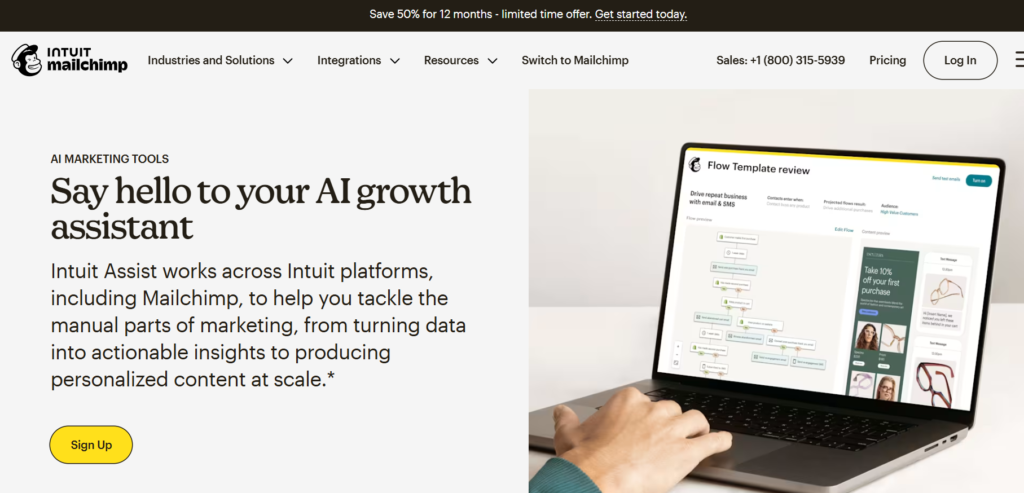
Mailchimp remains a friendly entry point for solopreneurs, creators and small lists. Its Intuit Assist features can help draft email content and support automation templates. However, feature access can vary by plan, country and availability, so check your account before building a campaign around a specific AI feature.
- Best for: First-time email marketers and smaller lists
- AI feature: Intuit Assist for content and flow support
- Watch out for: Advanced automation tools may be limited by plan
Mailchimp is a soft landing when you are still learning the basics. You can choose a template, create a simple welcome sequence and get help writing a subject line. However, once your customer journeys become more complex, you may outgrow it.
AI Email Marketing Tools at a Glance
The table below compares the main use cases. It does not crown one universal winner because a Shopify store, B2B SaaS company and local service business need different things.
| Tool | Best For | Main AI Strength | Consider Before Buying |
| ActiveCampaign | Advanced lifecycle campaigns | Predictive sending and automation | Needs setup and sufficient list data |
| HubSpot | CRM-led B2B marketing | CRM-connected AI support | Costs can rise with growth |
| Klaviyo | Ecommerce retention | CLV and churn predictions | Needs reliable order history |
| Brevo | Budget-friendly multichannel teams | AI content and campaign support | Less suited to complex CRM operations |
| Mailchimp | Beginners and small lists | AI copy and starter automations | Advanced features vary by plan |
The best email marketing platform in 2026 is the one that matches how your business already sells. Do not buy a complex automation suite if you only send one monthly newsletter. Likewise, do not rely on basic templates if your store has thousands of repeat buyers.
How to Choose the Right AI Email Marketing Tool
Choose a tool based on what you sell and where your customer data lives. The AI label matters less than whether the platform can act on useful signals. A decent platform that connects to your CRM or store often beats a clever AI tool sitting in a data silo.
- Choose ActiveCampaign: If you need detailed customer journeys and branching automation.
- Choose HubSpot: If CRM data drives B2B marketing and sales follow-up.
- Choose Klaviyo: If ecommerce retention and customer value guide your strategy.
- Choose Brevo: If you want affordable email, SMS and WhatsApp campaigns.
- Choose Mailchimp: If you are building your first list or newsletter.
Before committing, test one real campaign. A demo can look polished, but only a live campaign shows whether the tool fits your team. Check email editor speed, reporting clarity, automation limits and prices at your projected list size a year from now.
How to Get Better Results From AI Email Automation Tools
AI can speed up the work, but it cannot repair a confusing offer, weak data or a message nobody wants. Start with solid basics before turning on every automation switch.
Give AI Better Customer Context
Connect your CRM, ecommerce platform or customer database before expecting smart personalization. AI email marketing tools need purchase history, pages viewed, lead source and lifecycle stage to make useful choices. A customer who bought running shoes should get care tips or relevant accessories, not a random formalwear promotion.
The same principle applies to content. Your prompts should include audience, product, campaign goal, offer, tone and format.
For better copy prompts, explore these AI writing tools for bloggers. The methods work for email writing too.
Test One Email Variable at a Time
Testing everything at once creates confusion. If you change the subject line, offer, CTA, image and send time together, you cannot tell what improved the campaign. Instead, test one variable and give it enough sends to produce a meaningful result.
Use an AI email generator to create five subject-line variations. Then test two of them. Keep the email body and audience consistent. That simple discipline prevents a lot of false wins.
Keep a Human Review Before Send
AI-generated emails can sound polished while including the wrong discount, product feature, date or link. A quick human check protects your brand and customer trust. Review the following before every send:
- Offer details and expiration dates
- Product claims and pricing
- Brand tone and spelling
- Links, images and buttons
- Consent, unsubscribe and compliance settings
AI handles the first draft. You protect the relationship. That is a much healthier division of labor.
FAQs About AI Email Marketing Tools
Which Email Marketing Platform Is the Best in 2026?
ActiveCampaign is strong for deep automation, HubSpot for CRM-led B2B campaigns, Klaviyo for ecommerce retention, Brevo for affordability and Mailchimp for beginners. The best platform depends on your customer data, budget and marketing workflow.
Which AI Tool Is Best for Email Marketing?
ActiveCampaign works well for predictive email marketing and complex automations. Klaviyo suits ecommerce personalization, while HubSpot fits CRM-driven B2B teams. Pick the platform that matches your customer journey instead of chasing the biggest feature list.
Is Email Marketing Still Worth It in 2026?
Yes. Email marketing remains valuable because you own your subscriber list rather than depending entirely on social platforms. AI can improve timing, segmentation and drafting, but relevant offers and customer trust still drive meaningful results.
What Are the Top 3 Email Marketing Tools?
For different use cases, ActiveCampaign, HubSpot and Klaviyo are strong choices. ActiveCampaign supports advanced automations, HubSpot connects campaigns with CRM data and Klaviyo helps ecommerce brands use customer behavior and purchase data.
Final Thoughts
The smartest AI email marketing tool is not the one that writes the fastest. It is the one that helps you send a useful message to the right person at the right moment.
Start with your existing data and your biggest email problem. Maybe your welcome sequence feels flat. Perhaps churn is rising. Or maybe sales and marketing are working from different contact records. Pick one platform that solves that problem well, test it with a real campaign and let the results guide your next move.
One Response